
Demand Control Ventilation
Mechanical draft, modulating dampers, combustion air and critical airflow control that holds draft across the full turndown range.
Codes and listings
- UL 378
- UL 705
- NFPA 54
- CMC
- ASHRAE 90.1
- Title 24
Most mechanical exhaust in Northern California still runs at one speed, all day, whether the appliance below it is firing or idle. Demand control replaces that with closed-loop modulation, and the energy math is rarely close.
This category spans four related control problems: holding draft on high-temperature appliances, supplying combustion air on demand, stabilizing shared vertical risers in multi-story buildings, and tracking critical airflow in variable-volume spaces.
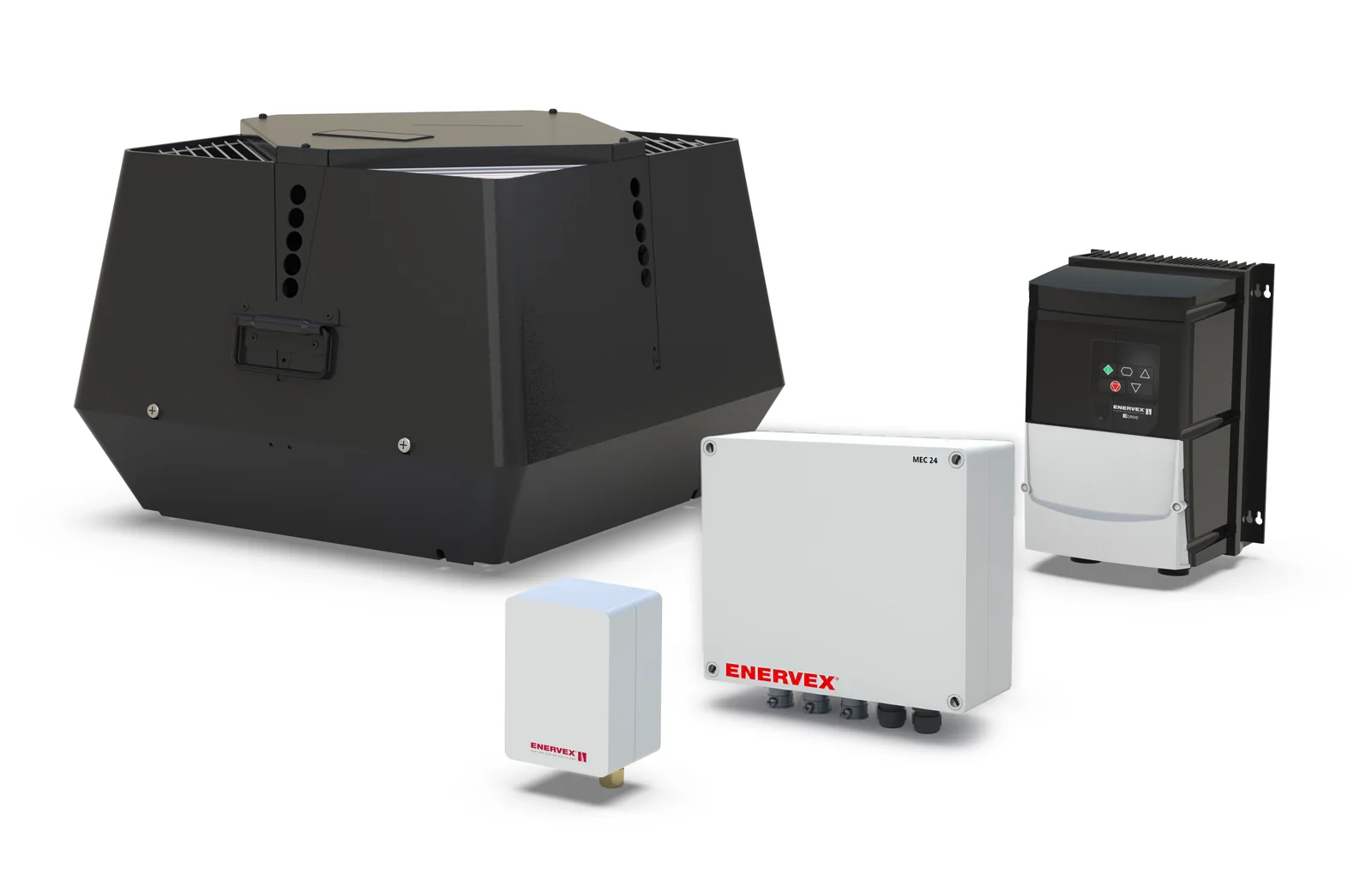
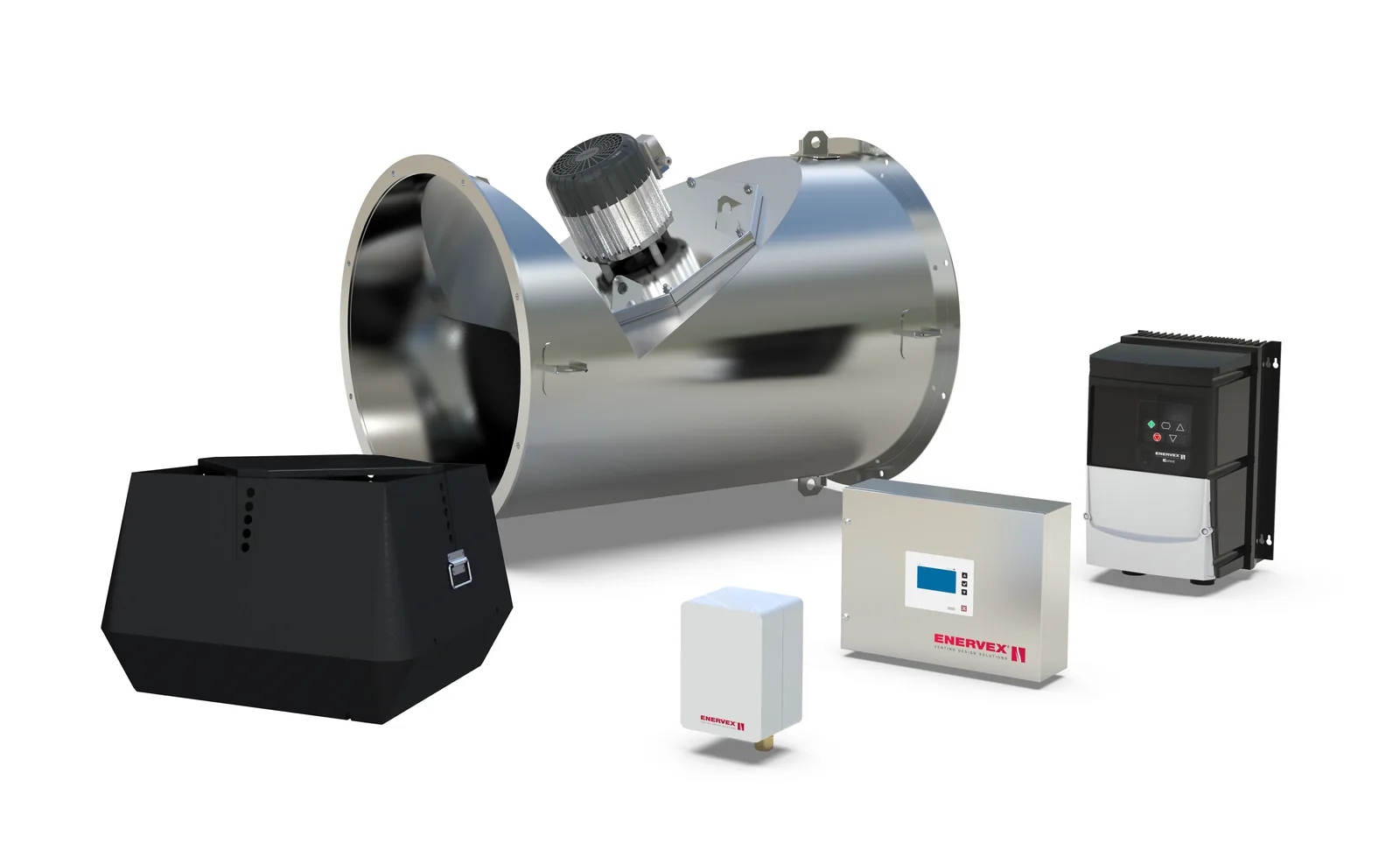
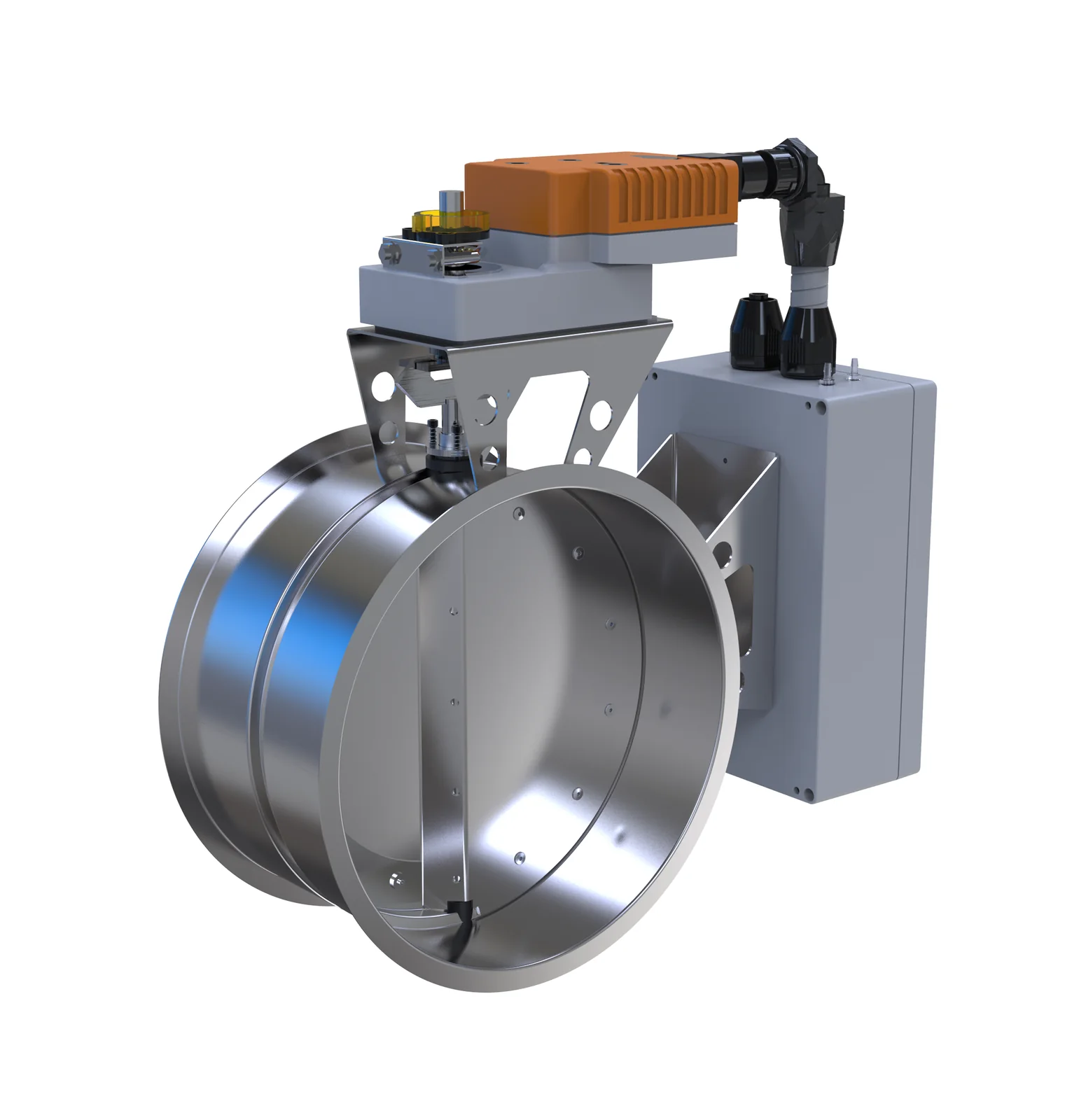
On the draft side, termination fans (Model RSV) and inline mechanical draft fans (Model TDF) pair with SMDS modulating damper control and Model ADF dampers. Integrated suites such as CASV and CASI are listed to UL 378 and use continuous transducer pressure monitoring to modulate fan output and damper position in real time, which prevents both over-draft and flue gas spillover.
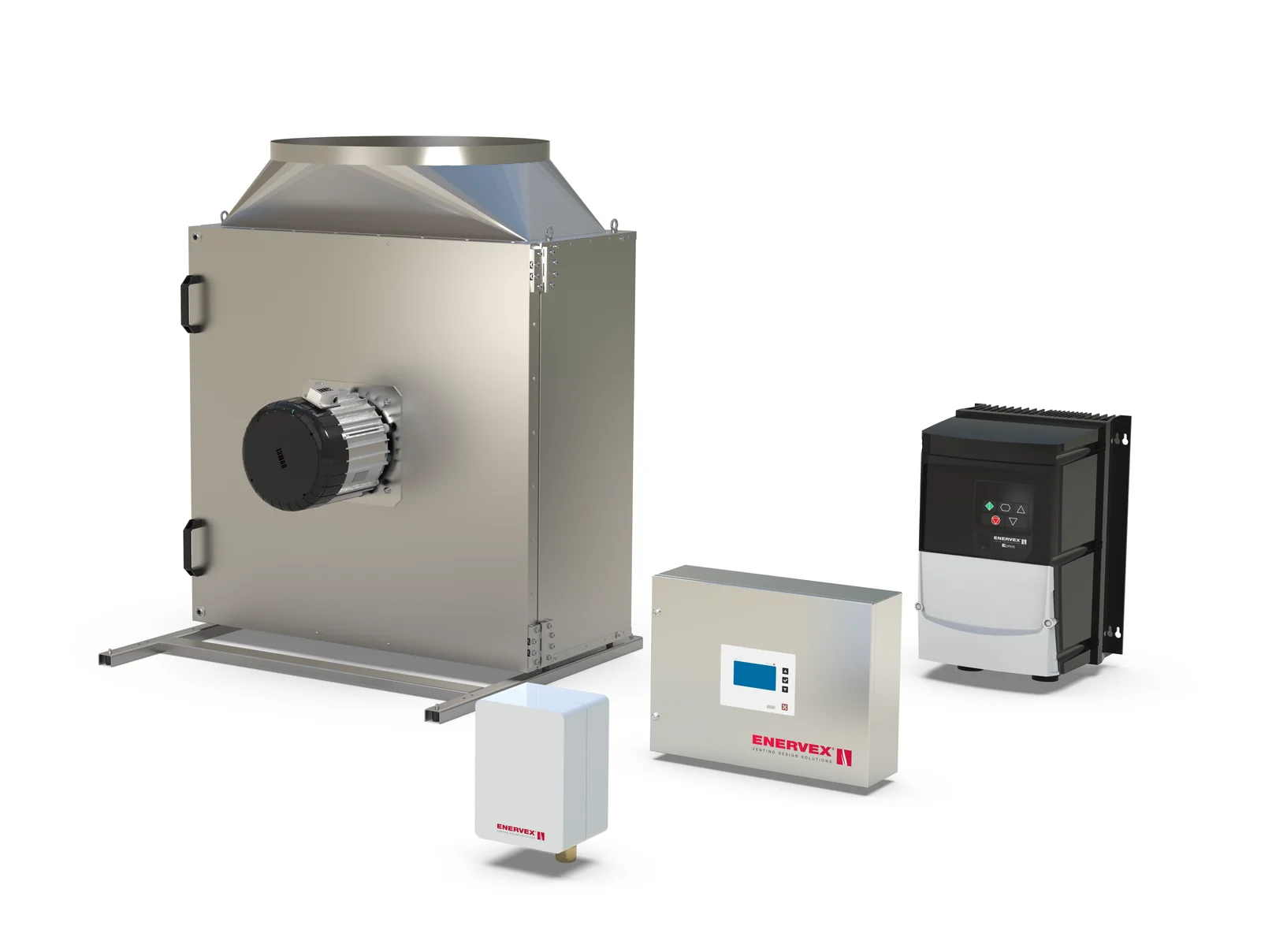
On the ventilation side, pressure, current, temperature, and air-quality sensing drop shared risers to a code-compliant low-speed standby when source zones are idle. Savings arrive twice: less fan motor energy, and far less conditioned building air pulled out of the envelope during off-peak hours. Combustion air suites use UL 705 tube-axial fans (Model SFTA) and inline box ventilators to meet NFPA 54 and CMC without over-ventilating the boiler room.
Where it shows up
- Multi-story residential with shared exhaust risers
- Central boiler rooms and laundry plants
- Commercial kitchens with variable service hours
- Laboratory and multi-zone research buildings
- Title 24 driven retrofits and re-commissioning
Closed-loop, not scheduled
Transducer and sensor feedback modulates fan speed and damper position against a live setpoint.
Listed control suites
CASV and CASI packages listed to UL 378; air-moving hardware listed to UL 705.
Riser pressure stabilization
Balanced static pressure across multi-story shafts eliminates cross-contamination and backdraft between floors.
Code-compliant turndown
Proportional modulation from full design load down to fractional standby, per ASHRAE 90.1 and Title 24.
Draft Control
1 system
Multi-Zone DCV
2 systems
- Multi-Story Demand-Controlled Ventilation (DCV) SystemsIntelligent multi-zone DCV for shared vertical risers handling kitchen, bath, and dryer exhaust in residential and commercial towers.ASHRAE 90.1 · Title 24
 Critical Airflow & Demand Control VentilationClosed-loop variable-volume airflow management for kitchens, labs, and multi-zone commercial facilities. ASHRAE 90.1 / Title 24.ASHRAE 90.1 · Title 24 · ASHRAE 62.1
Demand Control Ventilation, answered plainly.
- How does demand control ventilation save energy twice?
- Fan power falls with the cube of speed, and a slower exhaust fan also stops pulling expensive conditioned air out of the building envelope during idle hours.
- What is the SMDS modulating damper control system used for?
- It regulates volumetric flow and over-draft on high-temperature appliance venting, and provides tight thermal isolation on standby cycles, using Model ADF heavy-duty draft dampers.
- Is mechanical draft equipment listed as a system?
- Yes. Integrated CASV and CASI packages, combining the fan, damper, and control network, are listed to UL 378 rather than assembled from unlisted parts.