
Kitchen Exhaust
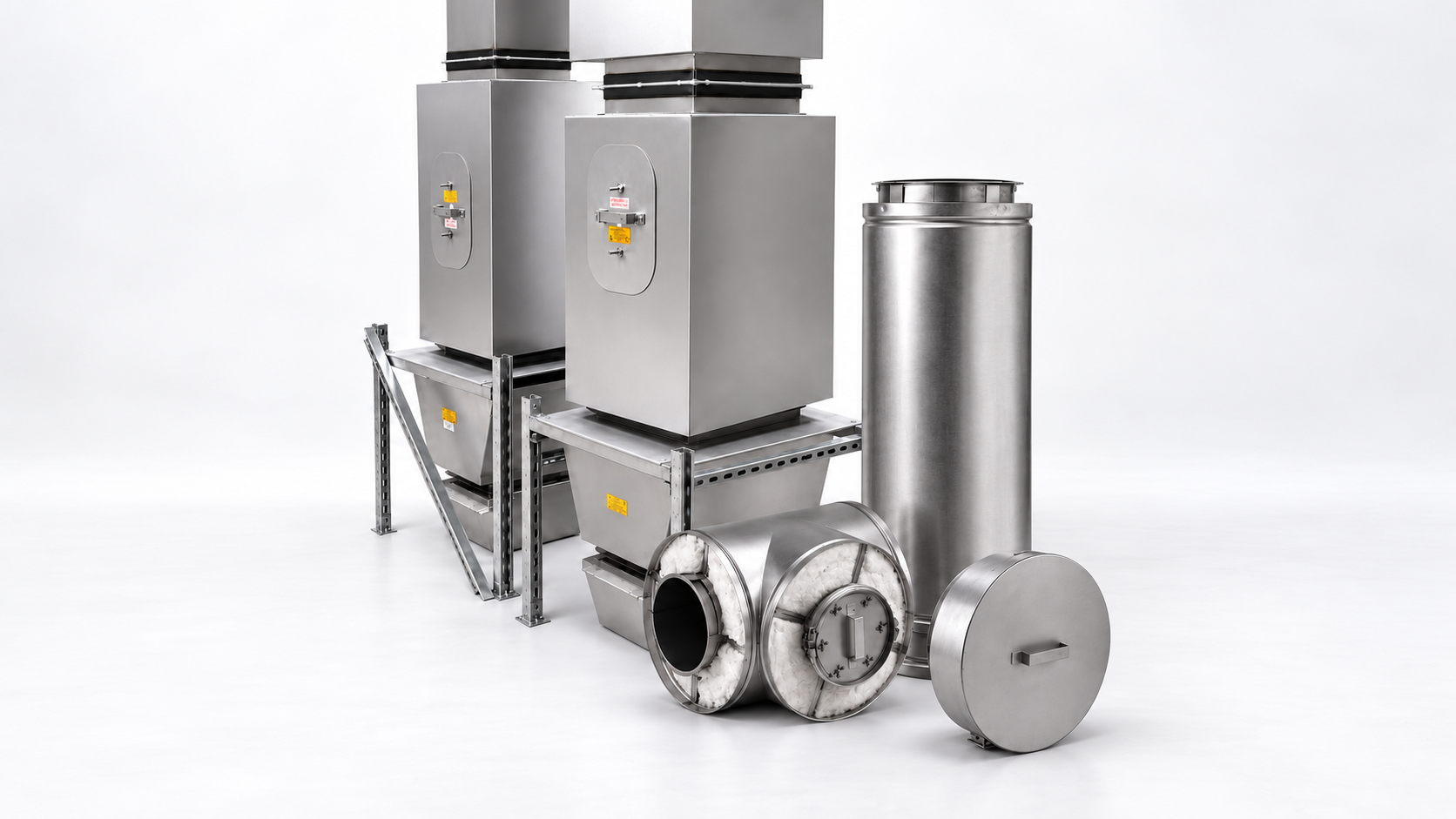
UL1978 and UL2221 listed factory-built grease duct, zero-clearance enclosures and oven exhaust for commercial and institutional kitchens.
Codes and listings
- UL 1978
- UL 2221
- ASTM E2336
- NFPA 96
- UL 103
- UL 1738
- CMC
Grease-laden exhaust is the least forgiving air stream in a commercial building. It has to leave the kitchen through a listed, fire-rated path, hold that rating through every shaft penetration, and stay cleanable for the life of the building.
EXD represents factory-built grease duct engineered to UL 1978 and UL 2221, in rectangular and circular profiles, single-wall, double-wall air-insulated, and zero-clearance fiber-insulated. Zero-clearance systems carry their own tested 2-hour enclosure, so the field-built drywall or masonry shaft, and the coordination that comes with it, comes off the drawings entirely.
Rectangular duct wins where hood collars and ceiling depth dictate a flat profile. Circular duct wins on long horizontal runs: smoother interior fluid dynamics, lower static pressure drop, higher sustained velocity, and a code-compliant reduced slope past 75 feet. We size and route both, then hand back a submittal package that matches what will actually get installed.
The same family covers commercial and industrial oven exhaust: bakery, conveyor, and high-heat deck ovens vented to UL 103 and UL 1738, with insulation profiles selected to keep skin temperatures and clearances inside a tight ceiling plenum.
Where it shows up
- Restaurants and food halls
- Hotel and casino kitchens
- Hospital and campus dining
- Mid- and high-rise residential kitchen risers
- Commercial bakeries and pizza concepts
Listed path, end to end
Hood collar to termination as one listed assembly, no hybrid field-fabricated segments carrying the fire rating.
Shaft elimination
UL 2221 zero-clearance enclosures replace field-built 2-hour shafts and recover rentable floor area.
Profile selection
Rectangular for plenum depth, circular for extended horizontal runs and reduced slope.
Bolt-together assembly
Modular flanged joints replace field welding, compressing install hours and inspection risk.
Factory-Built Grease Duct
2 systems
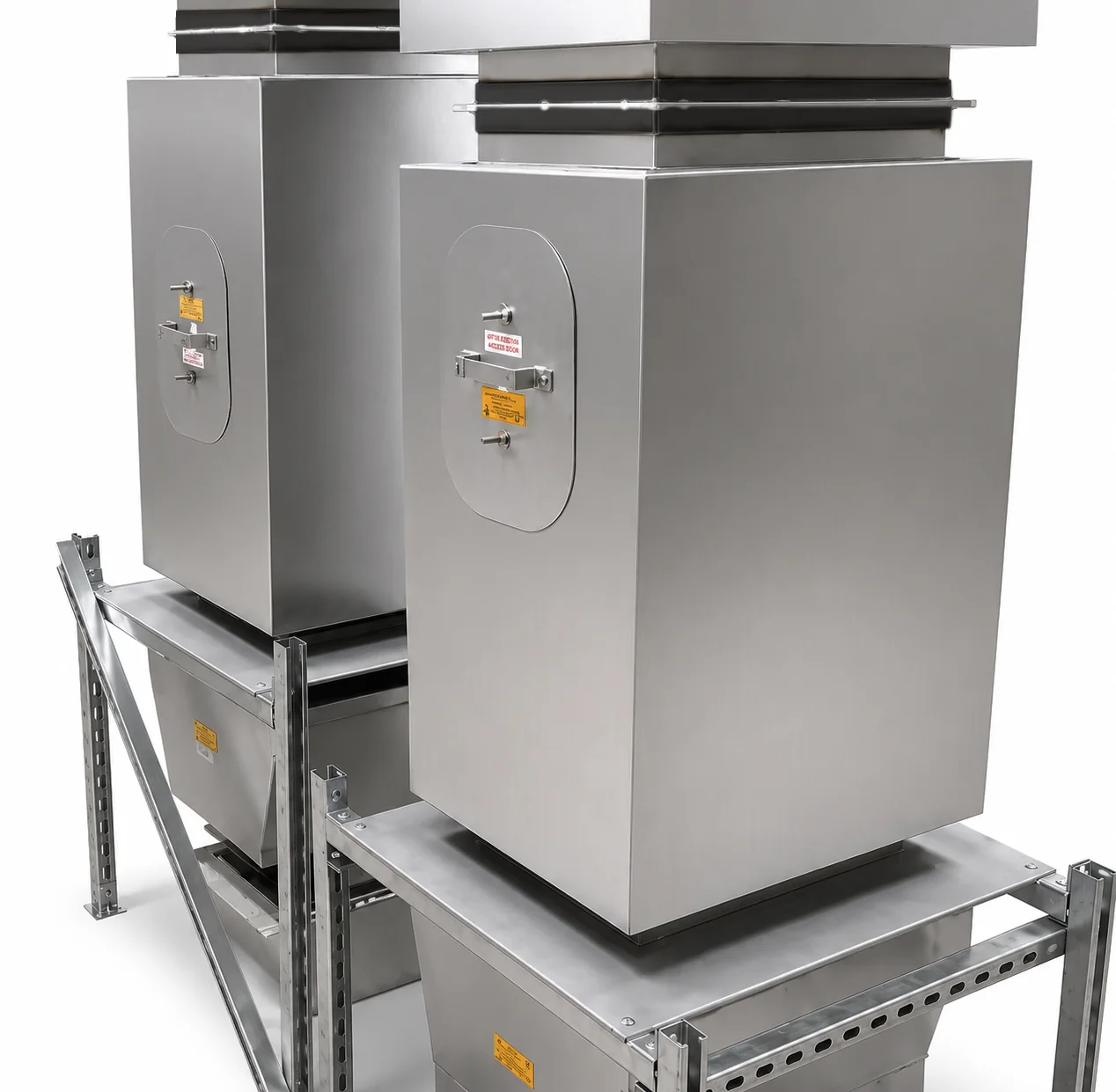 Rectangular Factory-Built Grease DuctPrefabricated rectangular UL 1978 / UL 2221 grease duct from VaughanAir DuraDuct and Van-Packer, single-wall and zero-clearance double-wall.UL 1978 · UL 2221 · ASTM E2336 · NFPA 96
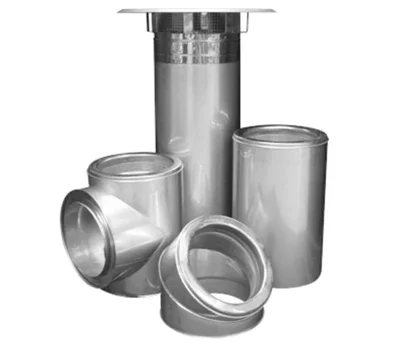
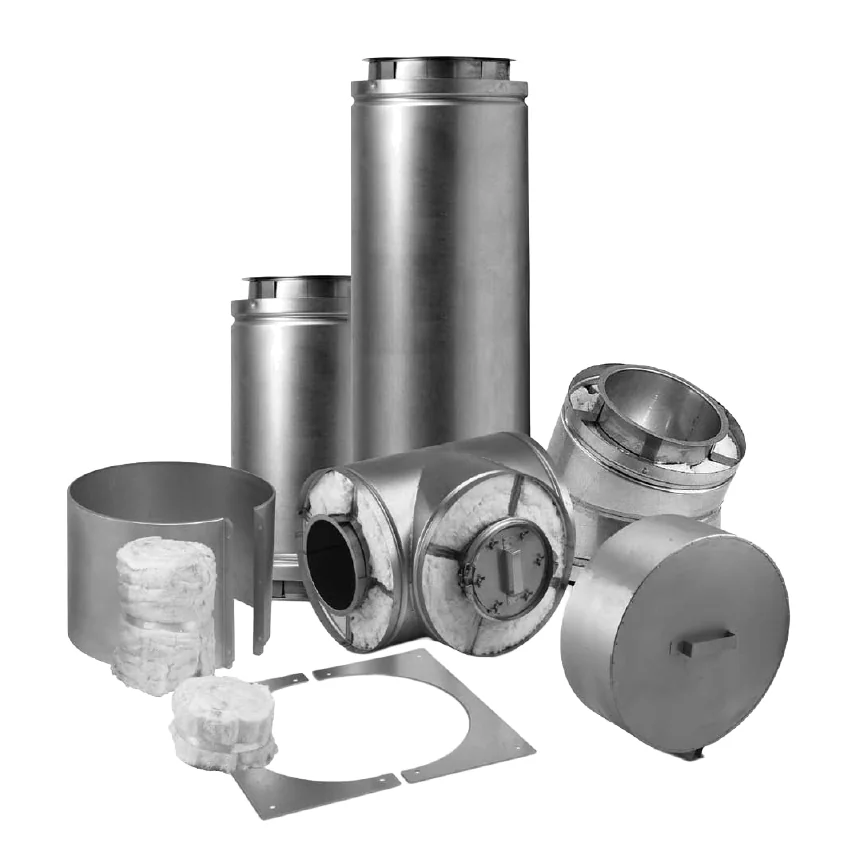 Circular Factory-Built Grease DuctHigh-efficiency circular grease duct, single-wall, double-wall air-insulated, and zero-clearance fiber-insulated to UL 1978 / UL 2221.UL 1978 · UL 2221 · NFPA 96
Kitchen Exhaust, answered plainly.
- What is the difference between UL 1978 and UL 2221?
- UL 1978 is the listing for the grease duct itself. UL 2221 is the listing for the fire-rated enclosure around it. A zero-clearance system carries both, which is what lets it run without a separately constructed 2-hour shaft.
- When should a project use circular grease duct instead of rectangular?
- Circular is the better engineered answer on long horizontal runs, generally beyond 75 feet, where lower static pressure drop, higher sustained velocity, and a reduced code-compliant slope matter more than a flat profile.
- Does factory-built grease duct still need a fire-rated shaft?
- Not when the system is a zero-clearance assembly listed to UL 2221. The tested enclosure is part of the product, which removes the field-built drywall or masonry shaft from the scope.